

Passive Real Estate Investing in 2026

Imagine earning steady income from real estate while you're traveling, spending time with family, or focused on your career. No toilet emergencies. No tenant disputes. No weekend showings.
That's the promise of passive real estate investing, and in 2026, it's not just a dream—it's how smart investors are building serious wealth.
If you've been curious about real estate but dreaded the landlord lifestyle, this guide is for you. Let's explore how you can capture real estate's wealth-building power without sacrificing your nights and weekends.
What Exactly Is Passive Real Estate Investing?
Here's the simple version: You get to own real estate and enjoy the profits, but someone else handles all the work.
Instead of buying a rental property and managing it yourself, you invest money into professionally-managed real estate deals. Experienced teams handle everything—finding properties, managing renovations, dealing with tenants, and eventually selling at a profit.
Your job? Write a check and receive distributions.
Think of it like this: You wouldn't open a restaurant and cook every meal yourself, right? You'd hire a chef. Passive real estate investing works the same way. You're the business owner, but experienced operators run the day-to-day.
The numbers back it up. Multifamily syndications consistently deliver 10%+ annual returns, significantly outperforming the stock market's 7% average over similar periods. Plus, you get tax benefits that stocks can't match.
Why 2026 Is Your Year to Invest
The real estate market is setting up perfectly for passive investors right now. Here's why:
Banks Are Facing a Reckoning
Over $500 billion in commercial real estate loans are coming due between 2025 and 2027. Many property owners who borrowed at 3% now face refinancing at 6-7%.
What does this mean for you?
Distressed sellers. Better deals. Prime opportunities to buy quality properties at discounts.
People Keep Moving to Growing Markets
The migration to Sunbelt states and California's Bay Area continues at full speed. Cities in Texas, Florida, Arizona, and select California metros are seeing 2%+ annual population growth.
More people = more housing demand = rising rents = better returns for investors.
They're Not Building Enough Houses
Here's a shocking stat: Construction of starter homes (under 1,400 sq ft) has dropped 80% since the 1970s.
Add in zoning restrictions, labor shortages, and limited developable land, and you've got a recipe for sustained rental demand. When supply is tight and demand is strong, property owners win.
Your Money Stays Protected from Inflation
With inflation still running around 2.7%, real estate offers something your savings account can't—your investment grows with inflation while generating income that rises over time.
Real estate cap rates are running about 175 basis points above the 10-year Treasury. Translation: You're getting paid well for owning real assets instead of bonds.
The Problem with Traditional Real Estate Investing
Let's be honest about what most people picture when they think "real estate investor."
You're probably imagining someone fielding calls about broken water heaters, chasing late rent payments, and spending weekends at Home Depot. Research shows landlords spend anywhere from 4 to 40 hours per month managing their properties.
Have multiple properties? Congratulations, you've just given yourself a second full-time job.
But the time commitment is just the beginning. Active real estate investing also means:
Putting all your eggs in one basket – Your entire investment tied to one or two properties in one neighborhood
Becoming a market expert overnight – You need to understand local zoning laws, school districts, crime rates, job markets, and more
Playing handyman – Or paying others constantly for repairs, landscaping, pest control, and upgrades
Dealing with humans – Screening tenants, handling complaints, enforcing lease terms, managing turnover
Tying up serious cash – 20-25% down payments plus maintaining reserve funds for emergencies
Sound exhausting? It is.
That's exactly why passive investing has exploded in popularity. You get the wealth-building power of real estate without becoming a landlord.
How Passive Real Estate Investing Actually Works
The most popular structure is called real estate syndication. Don't let the fancy term intimidate you—it's actually straightforward.
Here's the deal flow:
Step 1: The Deal Sponsor Finds an Opportunity
A professional team (called the sponsor or general partner) identifies a promising property. Maybe it's an apartment complex that's been mismanaged and has potential. Or a development project in a growing neighborhood.
They spend months analyzing the market, running numbers, and negotiating the purchase.
Step 2: They Structure the Investment
The deal gets set up as an LLC or Limited Partnership. The sponsor typically puts in 5-20% of the money needed (skin in the game matters), and passive investors like you provide the other 80-95%.
Step 3: You Review and Invest
You receive detailed documents explaining:
What property they're buying and why
What improvements they'll make
How the numbers work
What returns they're targeting
When you'll get your money back
If it looks good, you sign the papers and wire your investment (minimum investments typically range from $25,000-$100,000).
Step 4: They Execute the Plan
Now the real work begins—but not for you.
The sponsor's team handles everything:
Upgrading units to justify higher rents
Improving property management and operations
Reducing expenses and increasing income
Keeping you updated with quarterly reports
Step 5: You Receive Quarterly Distributions
As the property generates rental income, you get your share deposited directly to your bank account. Most deals distribute quarterly.
Step 6: Profit at the Exit
After typically 3-7 years, the property sells. You receive your original investment back plus your share of the profit. Many investors immediately reinvest into the next opportunity.
Bottom line: You write one check, receive quarterly income for several years, and get a lump sum at the end. The sponsor handles everything else.
The Secret Weapon: Vertical Integration
Here's something most investors don't know: Not all sponsors are created equal.
The best operators use something called vertical integration. This is the secret sauce that separates great investments from mediocre ones.
What Does "Vertically Integrated" Actually Mean?
Most real estate firms focus on just one piece of the puzzle. One company finds deals. Another manages properties. A third handles construction. Each handoff creates delays, miscommunication, and extra costs.
A vertically integrated operator? They control the entire process in-house:
✓ Finding and acquiring properties
✓ Construction and renovation management
✓ Property management
✓ Supply chain and materials
✓ Design and planning
✓ Asset management through sale
Think of it like Apple designing, manufacturing, and selling their own products versus Samsung cobbling together parts from different suppliers. The integrated approach wins every time.
Why This Matters to Your Returns
Cost Savings: When you cut out middlemen, costs drop dramatically. Vertically integrated operators reduce project costs by 30% or more. Every dollar saved goes straight to your returns.
Faster Execution: No waiting for third-party contractors to fit you into their schedule. Internal teams move faster and communicate better.
Quality Control: When the same company handles everything from blueprints to tenant move-ins, nothing falls through the cracks.
Aligned Interests: Everyone works toward the same goal—maximizing your investment returns. No competing agendas from different contractors.
Deep Expertise: Companies that manage every step develop unmatched knowledge. They know exactly what works and what doesn't.
This isn't just theory. Properties developed and managed by vertically integrated firms consistently outperform traditional operators.
Real-World Example: Sohay Square
Let's make this concrete with a current opportunity that showcases vertical integration in action.
Sohay Square is a ground-up modern townhome development in the heart of California's Bay Area. This project exemplifies how integrated operations transform investment potential.
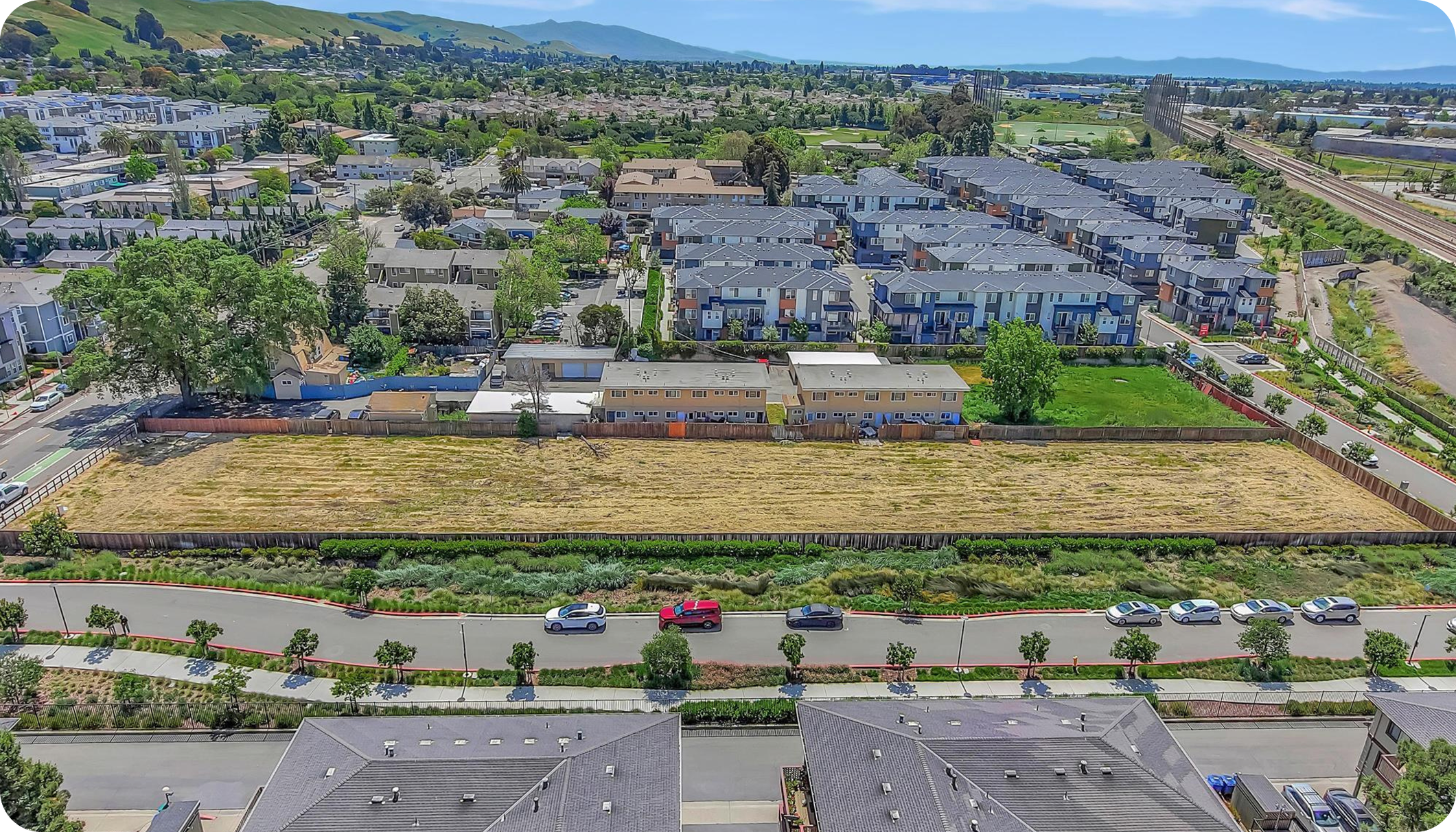
Sohay Square Land Image
Why This Location?
The Bay Area continues experiencing explosive demand for quality housing that professionals can actually afford. Sohay Square targets this underserved market with modern townhomes strategically located near:
Major employment centers (tech, biotech, finance)
Public transportation hubs
Shopping, dining, and lifestyle amenities
Highly-rated schools
The Numbers That Matter
Here's what investors are looking at:
Projected Returns:
16% to 22% Levered IRR (Internal Rate of Return)
1.5x to 1.74x Equity Multiple (get back $1.50-$1.74 for every $1 invested)
~3-year investment timeline
Translation: Invest $100,000, potentially receive $150,000-$174,000 back in three years, while collecting quarterly distributions along the way.
Compare that to leaving $100,000 in the stock market and hoping for a 7% annual return.
The Vertical Integration Advantage in Action
What makes these return projections realistic? Complete operational control:
Development: In-house development team means no general contractor taking 15-20% off the top. Direct oversight keeps quality high and costs controlled.
Construction: Integrated construction management cuts typical costs by 30%+. When your construction team reports to the same executives as your project managers, everyone stays aligned.
Supply Chain: Central warehouse with pre-negotiated supplier relationships means materials arrive on time at locked-in prices. No costly delays or price surprises.
Design Excellence: Purpose-built design maximizes square footage efficiency and market appeal while minimizing construction complexity—a balance that drives both rental rates and sale prices.
Asset Management: From day one through final sale, unified oversight ensures every decision supports maximum investor value.
This integration eliminates the chaos you see in typical developments where the developer, general contractor, property manager, and asset manager all have different priorities and communication breaks down.
The Tax Advantages
(This Gets Interesting)
Real estate isn't just about strong returns—it's about keeping more of what you earn.
Depreciation: The Gift That Keeps Giving
The IRS lets you "depreciate" rental properties over 27.5 years. This creates a paper loss that reduces your taxable income—even while the property makes money.
Many deals use cost segregation studies to accelerate these deductions, sometimes creating losses in early years that offset other income.
Real talk: It's entirely possible to receive $10,000 in distributions but report a $5,000 loss on your taxes. You made money, but the IRS treats it like you lost money. That's the power of real estate tax strategy.
Long-Term Capital Gains
When properties sell after 1+ years, profits get taxed at lower capital gains rates (typically 15-20%) instead of ordinary income rates (up to 37%).
For high earners, this difference is massive.
Interest Deductions
Mortgage interest on investment properties is tax-deductible, further reducing taxable income.
Pass-Through Benefits
As a limited partner in an LLC or LP, you avoid corporate double taxation. Income and deductions flow straight to your personal tax return.
The combined effect? Real estate investing can be incredibly tax-efficient compared to stocks, bonds, or actively managed portfolios.
Always consult your CPA to maximize benefits for your specific situation.
Let's Talk About Risk
No investment is risk-free, and anyone who tells you otherwise is lying. Here are the real risks in passive real estate investing:
Market Cycles Happen
Real estate values go up and down. Buy near a market peak, and your property might be worth less in the short term.
Mitigation: Choose sponsors who buy based on fundamentals, not speculation. Look for strong market demographics and conservative underwriting.
Your Success Depends on the Sponsor
If the sponsor lacks experience, makes poor decisions, or lacks integrity, your investment suffers.
Mitigation: Thoroughly vet sponsor track records. Look for operators who've successfully completed multiple projects through different market cycles.
Your Money Gets Locked Up
Unlike stocks, you can't just sell your syndication investment tomorrow. Expect your capital to be tied up for 3-7 years.
Mitigation: Only invest money you won't need during the hold period. Maintain adequate liquidity elsewhere.
Single Property Concentration
Most syndications focus on one property. If that specific asset underperforms, you feel it.
Mitigation: Diversify across multiple deals, sponsors, property types, and markets over time.
Leverage Amplifies Risk
Properties bought with substantial debt face increased risk if values drop or refinancing becomes difficult.
Mitigation: Favor deals with conservative loan-to-value ratios (60-70% or less).
The key? Don't put all your eggs in one basket, choose experienced sponsors carefully, and maintain realistic expectations.
Your Action Plan: Getting Started in 2026
Ready to add passive real estate to your portfolio? Here's your step-by-step guide:
1. Confirm You're Eligible
Most syndications require "accredited investor" status. You qualify if you have:
$200,000+ annual income ($300,000 joint) for the last 2 years, or
$1,000,000+ net worth (excluding your primary home)
Some deals allow sophisticated non-accredited investors, but options are more limited.
2. Define What You Want
Get clear on your priorities:
Cash flow vs. appreciation? Some deals prioritize quarterly distributions; others focus on big payouts at the end
Risk tolerance? Conservative stabilized properties or higher-risk value-add opportunities?
Timeline? Can you commit capital for 3-5 years? 5-7 years?
Geographic preferences? Familiar markets or willing to invest nationally?
3. Research Sponsors Like You're Hiring Them (Because You Are)
Due diligence is everything. Evaluate sponsors on:
Track record: Have they successfully completed multiple deals? What were actual vs. projected returns?
Transparency: Do they communicate regularly and honestly?
Skin in the game: How much of their own money do they invest in each deal?
Team depth: Do they have specialists in acquisitions, construction, property management, and asset management?
Vertical integration: Do they control the full process or outsource to third parties?
Don't skip this step. Your sponsor is more important than the specific property.
4. Study the Deal Documents
When you find an opportunity that looks promising, dig into:
Private Placement Memorandum (PPM): The legal document outlining all deal terms
Operating Agreement: How profits get split and how decisions get made
Business Plan: Exactly what improvements they'll make and why
Financial Projections: Are assumptions realistic or overly optimistic?
Market Analysis: Do local demographics support the strategy?
Exit Strategy: How and when do they plan to return your capital?
Don't be afraid to ask questions. Good sponsors welcome educated investors.
5. Start Small and Diversify
Your first investment doesn't need to be $100,000. Many deals have $25,000 minimums.
Consider spreading your capital across:
2-3 different sponsors (reduces sponsor risk)
Different property types (multifamily, self-storage, commercial)
Different markets (Texas, Florida, California, etc.)
Different strategies (value-add, development, stabilized)
As you gain experience and confidence, you can concentrate larger amounts.
6. Stay Educated
The real estate market constantly evolves. Stay sharp by:
Joining investor communities and forums
Attending webinars and conferences
Reading industry publications
Networking with experienced passive investors
Reviewing your quarterly reports carefully
The more you learn, the better your investment decisions become.
What's Next for Passive Real Estate Investing?
The future looks bright. Here are trends shaping opportunities in 2026 and beyond:
Technology Is Changing Everything
Advanced analytics, AI-powered market forecasting, and digital investor portals make the investment process more transparent and accessible than ever.
Sustainability Matters
Green buildings with energy-efficient designs command premium rents from environmentally-conscious tenants. Smart sponsors are prioritizing ESG criteria.
Secondary Markets Are Rising
As primary markets like San Francisco and New York get expensive, secondary cities with strong demographics (Boise, Nashville, Austin, Raleigh) offer compelling value.
Institutional Money Is Pouring In
When pension funds, endowments, and family offices allocate billions to private real estate, it validates the asset class and potentially improves future liquidity.
Passive real estate investing offers something rare: the ability to build substantial wealth without sacrificing your time, sanity, or weekends.
By partnering with experienced, vertically integrated sponsors who control every aspect of the investment process, you access institutional-quality opportunities that would be impossible to tackle alone.
Whether you're a busy executive seeking portfolio diversification, an entrepreneur looking for tax-advantaged investments, or simply someone who wants real estate returns without the landlord headaches, passive investing deserves serious consideration.
The winning formula?
✓ Choose opportunities in high-growth markets with strong fundamentals
✓ Partner with transparent sponsors who have proven track records
✓ Favor vertically integrated operators who control costs and timelines
✓ Diversify across multiple deals as your portfolio grows
✓ Maintain realistic expectations and a long-term mindset
Projects like Sohay Square demonstrate how strategic positioning, operational excellence, and integrated business models deliver compelling returns for passive investors who do their homework.
The path to building real estate wealth is clear. The barriers to entry are lower than most people think.
The question is simple: Are you ready to stop watching from the sidelines?
Take the Next Step
Ready to explore how passive real estate investing can fit into your wealth-building strategy?
Discover current investment opportunities designed for accredited investors seeking consistent cash flow, long-term appreciation, and tax advantages—all without the landlord responsibilities.
Learn more about our vertically integrated approach and see how we're helping investors build wealth through strategic real estate investments in high-growth markets.
Schedule a call with our investor relations team to discuss your investment goals and explore opportunities that align with your financial objectives.
